

Heat Pump Installation in Middle Tennessee: What Homeowners Should Expect
Quick answer: Heat pump installation in Middle Tennessee starts with a load calculation, duct and electrical checks, then one outdoor unit that heats and cools. Most straightforward swaps finish in about one day when ducts are compatible. True Blue Heating and Cooling sizes, installs, and tests systems for Columbia, Spring Hill, Franklin, and nearby towns. Call (615) 568-7450.
A heat pump installation is not just a box swap. Done well, one outdoor unit and a matched indoor section handle both summer cooling and winter heating for homes across Columbia, Spring Hill, Franklin, Brentwood, and the rest of Middle Tennessee. Done poorly, the same equipment short cycles, struggles on cold mornings, and raises bills. This guide explains what a professional install includes, which site facts from True Blue Heating and Cooling apply, and how to prepare before a technician arrives.
Why Heat Pumps Fit This Climate
Middle Tennessee needs strong cooling for long, humid summers and reliable heat for cold snaps. An air-source heat pump moves heat rather than burning fuel for every degree of warmth, which is why many homeowners compare it with a separate furnace and air conditioner pair. Cold-climate models and dual-fuel setups exist when winter design temperatures push a standard unit hard.
The U.S. Department of Energy explains how residential central air conditioners and heat pumps are categorized in its consumer central air conditioner and heat pump page. FEMP purchasing guidance for air-source heat pumps covers efficiency criteria buyers should understand before comparing quotes. Neither document replaces a local load calculation, but both help you ask better questions.
What Heat Pump Installation Includes
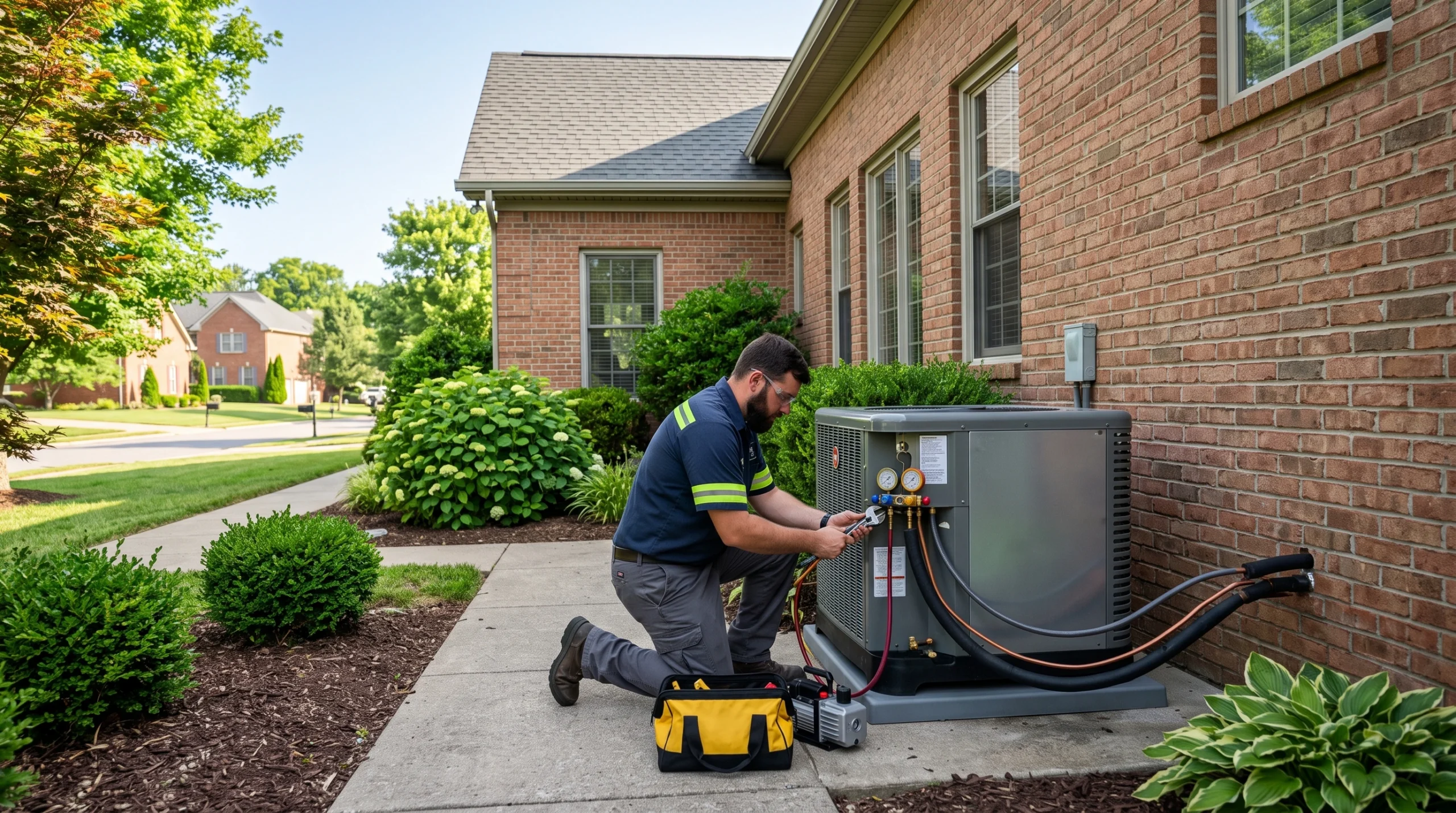
On our heat pump installation service page, True Blue describes evaluation of home layout, insulation, and existing equipment before recommending a system. Installation work typically covers removal of the old outdoor unit when needed, placement of the new condenser or heat pump, indoor air handler or coil work, refrigerant line connections, electrical ties, thermostat setup, and a full performance test in heating and cooling modes.
- Home evaluation and equipment sizing before ordering.
- Removal of failing outdoor and indoor components when replacement is approved.
- Duct and airflow checks so the new system can deliver rated capacity.
- Electrical and thermostat connections that match the equipment requirements.
- Startup testing, with guidance on filters and basic operation before the crew leaves.
If your current unit still runs but underperforms, ask for a repair evaluation before you approve a full install. An honest look at the existing equipment protects budget when the compressor and coils still have life left.
Sizing Beats Guessing the Old Tonnage
Matching the old nameplate tonnage is a common shortcut and a common cause of humidity problems. Oversized systems cool the air quickly, shut off, and leave moisture behind. Undersized systems run constantly and still miss setpoint on the hottest afternoons. A proper Manual J style load calculation accounts for square footage, orientation, insulation, windows, and occupancy.
Ask any installer to show how they sized the unit for your address, not for a generic floor plan. Equipment selection and air distribution have to work together, or the new heat pump will inherit the same comfort complaints the old system left behind.
Ductwork, Electrical, and Permit Reality
Existing ducts decide a large part of install day. Leaky or undersized returns starve a new heat pump the same way they starved the old air conditioner. Some homes need sealing, a few new runs, or a shift to ductless heads for additions and bonus rooms. Electrical panels sometimes need a dedicated circuit or disconnect update before a higher-efficiency unit can start safely.
Many Middle Tennessee jurisdictions require a permit for full system replacements. A licensed contractor typically pulls that permit and coordinates inspection. Rules vary by city and county, so confirm the plan in writing for Columbia, Spring Hill, Franklin, or Brentwood before work starts. True Blue lists local service coverage on city pages such as Columbia and Spring Hill.
Timeline: What a Typical Install Day Looks Like
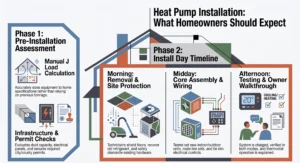
Most residential heat pump installations with compatible ductwork finish in about one day. Crews protect floors, recover refrigerant from the old system when required, set the new outdoor unit on a level pad, connect lines and wiring, evacuate and charge the circuit to manufacturer specs, and test both modes. Homes that need duct changes, panel upgrades, or multiple indoor zones can take longer. Ask for a written schedule so you know when the house will be without cooling or heat.
- Morning: protect work areas, recover refrigerant, remove old equipment.
- Midday: set new outdoor and indoor sections, connect line sets and controls.
- Afternoon: evacuate, charge, test airflow and temperature split, walk through thermostat use.
Cost Factors Without Invented Price Tags
True Blue does not publish a fixed heat pump price on the site, and this article will not invent one. Real quotes depend on tonnage, efficiency tier, duct condition, electrical work, and whether you choose a ducted or ductless layout. Ask for an itemized proposal that separates equipment, labor, permits, and any duct or electrical extras. Current promotions, when active, appear on the specials page.
Federal incentives can change the net cost. ENERGY STAR summarizes federal tax credit information for air-source heat pumps. Eligibility rules and credit amounts change over time, so verify current terms with a tax professional and your installer before you count on a specific dollar amount.
Repair First or Move Straight to Installation
Not every aging heat pump needs immediate replacement. If the compressor is healthy, refrigerant circuit issues are repairable, and the unit is under about 10 to 12 years old, a targeted repair can buy time. Replacement makes more sense when repairs stack up, major components fail, or efficiency and comfort have clearly slipped. After a cooling emergency, some homeowners restore comfort first, then plan the install; others need a full changeout the same week.
If cooling fails before you have a replacement scheduled, use the live AC repair service page for urgent options, and keep our companion guide to emergency AC repair in Middle Tennessee handy once that post is published in the same batch.
Protect the New System With Maintenance
A correct heat pump installation still needs clean filters, clear outdoor coils, and seasonal checkups. True Blue’s maintenance plan lists two annual tune-ups, a waived diagnostic fee, zero overtime charges, a 10 percent discount on indoor air quality products, and a 1-year repair warranty. The current promotional rate is $169 per year and, as shown on the homepage and specials page, expires October 31, 2026. Confirm the live offer when you enroll. That twice-a-year schedule fits Middle Tennessee’s back-to-back cooling and heating seasons. Our fall furnace and heat pump tune-up checklist outlines what a seasonal visit should cover.
Better airflow also supports indoor air quality. The EPA Indoor Air Quality hub explains why filtration and ventilation matter alongside temperature control. Ask about filter upgrades only after the system is sized and sealed correctly.
How to Choose Heat Pump Installers
Compare licensing, insurance, and real experience with the equipment type you want. Ask whether the company performs a load calculation, how they handle permits, what warranties cover labor and parts, and how they test the system at startup. Read recent reviews and look at completed projects. True Blue keeps scheduling open from the Columbia office at 2509 Cayer Ln Unit B, Columbia, TN 38401.
Call (615) 568-7450 to talk through heat pump installation for your home. The site lists office hours as 24 hours Monday through Saturday for urgent needs. Sunday is not listed as a 24-hour office day, so call to confirm availability. Standard installations are planned around equipment lead times and permit schedules rather than same-day emergency windows.
Ready to Plan Your Heat Pump Installation
Heat pump installation in Middle Tennessee rewards careful sizing, honest duct assessment, and a clean startup test. True Blue Heating and Cooling handles that process for homeowners in Columbia, Spring Hill, Franklin, Brentwood, and nearby communities. Call (615) 568-7450 or start on the heat pump installation service page. If you also need help after a sudden cooling failure, the AC repair page is the fastest live path while you plan the longer install.
Frequently Asked Questions
Q: How long does heat pump installation usually take?
A: Most straightforward replacements with compatible ductwork take about one day. Duct changes, electrical upgrades, or multi-zone ductless layouts can add time. Ask for a written schedule before work begins.
Q: Do heat pumps work in Middle Tennessee winters?
A: Modern air-source heat pumps handle typical Middle Tennessee winters, especially cold-climate models. Some homes keep electric heat strips or a gas furnace as backup for the coldest nights. Your installer should size for local design temperatures.
Q: What should I ask before approving a heat pump installation quote?
A: Ask how the load calculation was done, what duct or electrical work is included, which warranties apply, who pulls the permit, and how startup testing is documented. Request an itemized price.
Q: Is ductless heat pump installation an option for older homes?
A: Yes. Ductless or multi-split systems work well for homes without usable ducts, room additions, and spaces that never cool evenly. They still need correct sizing and outdoor unit placement.
Q: Can federal tax credits apply to a new heat pump?
A: Some air-source heat pumps qualify for federal tax credits when they meet efficiency rules. Confirm current ENERGY STAR and IRS terms before you rely on a specific credit amount.
Q: Should I repair my heat pump or replace it?
A: Repair is often reasonable for mid-life units with limited issues. Replacement is smarter when major components fail, repairs repeat, or the system is past roughly 10 to 15 years and comfort has declined.
Q: How do I schedule heat pump installation with True Blue?
A: Call (615) 568-7450 to request a consultation. Share your city, system age, and comfort goals so the team can plan the site visit and equipment options. Ask about current specials when you book.