


Install Ductless AC: Before You Hire an HVAC Contractor
If you plan to install ductless AC in your Tennessee home or business, the contractor you hire matters just as much as the equipment you choose. A ductless mini split can lower your energy bills, cool individual rooms, and skip the need for bulky ductwork. But a rushed installation can lead to refrigerant leaks, uneven cooling, and warranty headaches down the road. Before you sign a contract, homeowners across Franklin, Spring Hill, Columbia, and the rest of Middle Tennessee need to know what separates a qualified HVAC pro from a handyman with a truck.
According to the U.S. Department of Energy, ductless systems can reduce energy losses common in duct-based systems by a significant margin, since air handlers connect directly to the outdoor compressor through a small conduit rather than a network of leaky ducts. That efficiency only holds up when the system is sized correctly and installed by someone who understands your home’s specific layout and Tennessee’s humid summers.
Why Homeowners Are Choosing Ductless Mini Splits
Tennessee weather swings from freezing winters to sticky, humid summers. Ductless systems handle both extremes well because most units function as heat pumps, providing cooling and heating from a single system. Here is why property owners across the state are making the switch:
- No ductwork required, which is perfect for older farmhouses, historic homes in Columbia, or additions built without existing vents
- Room-by-room temperature control, so you are not cooling empty bedrooms or unused offices
- Lower utility bills over time thanks to inverter-driven compressors that adjust output instead of cycling on and off
- Quieter operation compared to traditional window units or older central systems
- Improved indoor air quality since ducts are a common source of dust, mold, and allergens
If your goal is to install ductless AC for a garage conversion, sunroom, or a home addition, a certified installer can walk you through sizing options based on square footage, insulation, and window exposure.
What to Check Before You Hire an HVAC Contractor
Not every contractor advertising ductless AC installation has the training to do it correctly. Refrigerant handling alone requires EPA Section 608 certification, and improper handling can violate federal law under the Environmental Protection Agency’s refrigerant management rules. Ask these questions before signing anything.
License and Insurance Confirm the contractor holds a valid Tennessee HVAC contractor license and carries liability insurance. You can verify licensing status through the Tennessee Department of Commerce and Insurance.
Manufacturer Certification Brands like Mitsubishi, Daikin, and Fujitsu require dealers to complete factory training before they can offer extended warranties. A contractor without this certification may void your equipment warranty even if the install looks fine on day one.
Load Calculation Experience A proper installer performs a Manual J load calculation rather than guessing at unit size. Oversized units short cycle and fail to dehumidify; undersized units run constantly and never reach set temperature. The Air Conditioning Contractors of America publishes the industry standard for this process.
References From Local Jobs Ask for addresses of recent installs in your area. A contractor with strong customer reviews and completed recent projects nearby will happily share this information.
Single Zone vs Multi Zone: Know the Difference
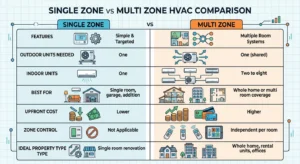
Before you install ductless AC, decide whether your property needs a single zone or multi zone configuration.
Single Zone Systems
- One outdoor condenser paired with one indoor air handler
- Best for a single room, home office, or garage
- Lower upfront cost and simpler electrical requirements
Multi Zone Systems
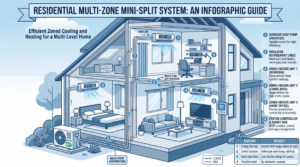
- One outdoor condenser connected to two to eight indoor units
- Ideal for whole home comfort without ductwork
- Each zone runs independently, so bedrooms, living rooms, and kitchens can be set to different temperatures
- Higher upfront investment but fewer outdoor units cluttering your property
Property owners managing rental units or commercial spaces in Nashville or Murfreesboro often prefer multi zone setups because tenants can control their own comfort without affecting neighboring units.
Common Installation Mistakes That Cost You Later
A poorly executed installation causes problems that surface months after the crew leaves. Watch for these red flags during and after the job.
- Incorrect refrigerant line length without proper vacuum testing, which leads to slow leaks and reduced cooling capacity
- Improper wall penetration sealing, allowing moisture and pests into your walls
- Undersized electrical circuits that trip breakers or create fire hazards
- Poor condensate drainage, which causes water damage to walls, floors, and ceilings
- Wrong unit placement, such as mounting the indoor head too close to the ceiling or in direct sunlight, reducing sensor accuracy
A qualified contractor will pressure test the line set with nitrogen, pull a deep vacuum to remove moisture, and confirm proper refrigerant charge before calling the job complete. This is standard practice recommended by the Air-Conditioning, Heating, and Refrigeration Institute.
Permits and Electrical Requirements in Tennessee
Most Tennessee municipalities require a mechanical permit for any new ductless AC installation, and many also require an electrical permit if a new circuit is added. Your contractor should handle this paperwork for you, not leave you to navigate city hall on your own. A dedicated 220 volt circuit is standard for most residential mini split condensers, and your electrical panel needs enough available capacity to support it.
If you are unsure whether your home’s panel can handle an additional load, ask your installer to inspect it during the initial free estimate. This step prevents mid-project surprises that delay your comfort and add unexpected costs.
Maintenance After You Install Ductless AC
Ductless systems need less maintenance than central air, but they are not maintenance free. Indoor filters should be cleaned every two to four weeks during heavy use, and the outdoor condenser needs to stay clear of debris, leaves, and snow buildup. Signing up for a maintenance plan keeps your warranty valid and catches small issues, like a slow refrigerant leak or a clogged condensate line, before they turn into expensive repairs.
Cost Factors Property Owners Should Understand
Ductless AC installation cost depends on several factors:
- Number of zones needed for full coverage
- Brand and SEER2 efficiency rating of the equipment
- Length of refrigerant lines between indoor and outdoor units
- Electrical work required for the new circuit
- Accessibility of the installation location, such as second floor units or finished basements
Getting a detailed, written estimate that breaks down equipment, labor, permits, and warranty coverage protects you from vague pricing that balloons once the job starts. Compare this against central air conditioning installation costs if you are deciding between the two options for a renovation project.
Final Checklist Before You Sign a Contract
- Contractor holds a valid Tennessee HVAC license and EPA 608 certification
- Written load calculation provided for your specific space
- Manufacturer certification confirmed for the brand being installed
- Permits and electrical upgrades included in the written quote
- Clear warranty terms covering both parts and labor
- References or reviews available from recent local installations
Taking these steps before you install ductless AC protects your investment and ensures the system performs the way it was designed to for years to come. If you are ready to move forward, schedule a consultation with a licensed team that serves Franklin, Spring Hill, Columbia, Brentwood, and the surrounding Middle Tennessee area.
Frequently Asked Questions
Q: Is it worth it to install ductless AC in an older home? A: Yes, installing a ductless mini split is ideal for older homes without existing ductwork. You avoid tearing down walls, preserve historic architecture, and gain efficient room-by-room temperature control.
Q: Can a homeowner install ductless AC without a technician? A: DIY installation is risky because handling refrigerant lines, electrical connections, and wall penetrations requires specialized tools. Hiring a licensed professional protects your warranty and safety.
Q: How long does it take an HVAC contractor to install a mini split? A: A professional crew usually finishes a single zone installation in four to eight hours. Complex multi zone setups for whole homes often take two full days depending on electrical wiring needs.
Q: What permits or electrical upgrades are needed for a ductless system? A: Most local building codes require a mechanical permit and a dedicated 220 volt electrical circuit. Your HVAC installer typically coordinates permits and ensures your main panel handles the load.
Q: How does a ductless mini split compare to central air conditioning? A: Ductless units offer independent zone control and lose less energy than leaky ducts. Central air costs less to install if ductwork already exists, but mini splits lower monthly utility bills long-term.
Final Thoughts
Deciding to install ductless AC is one of the smartest upgrades a Tennessee homeowner or business owner can make, but the real value comes from who does the work, not just the equipment on the wall. A licensed, certified contractor protects your warranty, sizes the system correctly for your space, and handles permits so you are never left guessing. Skip the shortcuts, ask the right questions, and choose a team with real experience installing ductless systems across Middle Tennessee.
If you are ready to get started, reach out to True Blue Heating and Cooling for a free, no pressure estimate on your ductless AC installation.
True Blue Heating And Cooling
Call Us Now: Tel 615-568-7450